The Essence of the Face: Capturing Souls
Introduction: Beyond technical settings, beyond aperture and shutter speed, lies a sacred space: the encounter between two beings. Creating a portrait is not merely taking a photograph; it is orchestrating a collision between two worlds. Too often, portrait photography is reduced to a cold technical execution, where the subject is treated as an object to be manipulated for a predictable aesthetic result. Lights are set, poses are commanded, and we forget the essential: the human being breathing in front of the lens.
With "As I Am," I propose a total break from this industrial approach. This guide is not just a technical exposition; it is an immersion into my vision of portraiture, a discipline ranging from the most intimate psychological preparation to the mastery of the wild natural light of Vancouver Island. I firmly believe that to capture the soul, one must first know how to listen to it. In the sections that follow, I invite you to discover the pillars of my method, designed to create a sanctuary of trust where you can finally drop your armor and reveal your true vibration. Capturing a soul requires infinite patience; it is not about the "pose," but about "presence."
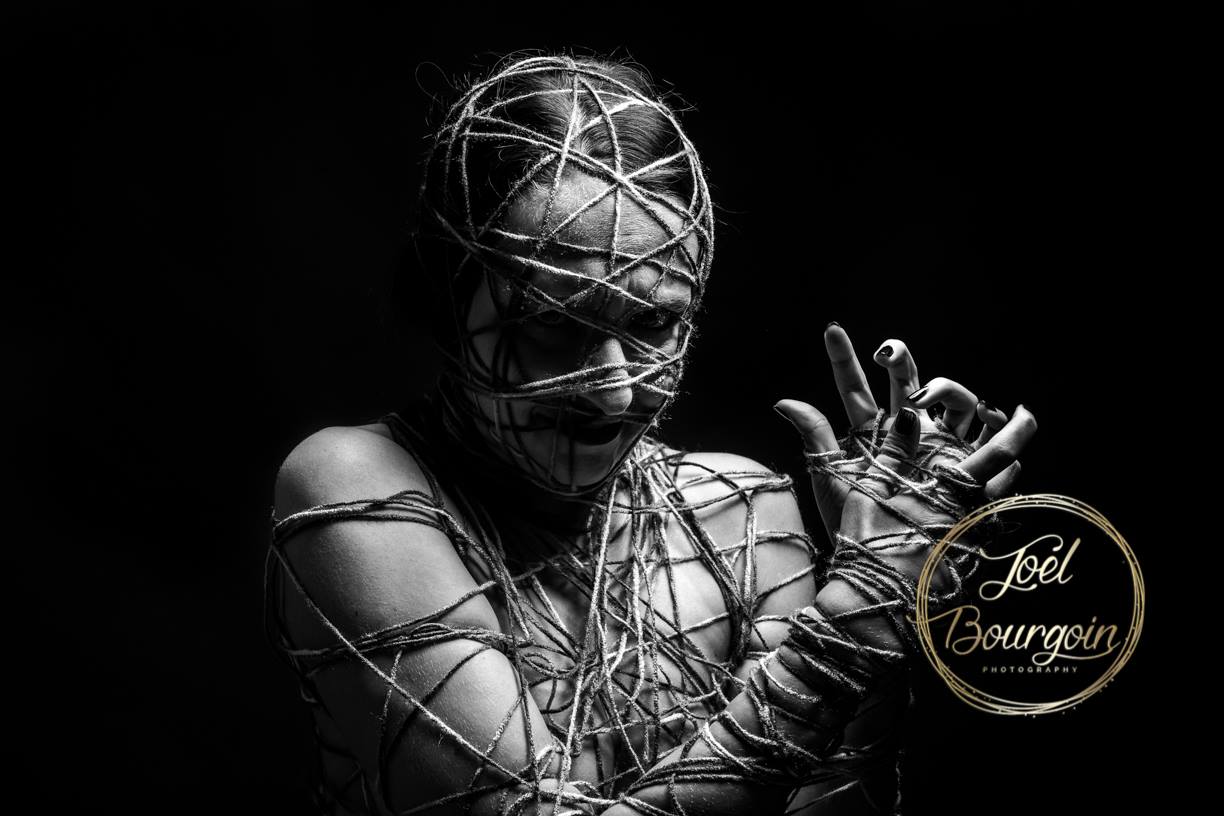
1. Dignity and Respect: The Ethics of the Lens
The foundation of my entire methodology rests on the unconditional respect for the individual. Before even taking out the equipment, I study your essence. Every person carries a unique story, and my role is to be its visual translator, not its censor. Dignity in photography begins with emotional consent. Just because a model agrees to be in front of the camera doesn't mean they are ready to open up.
Treating a subject with dignity means accepting their vulnerability as a strength. It is creating a moral contract where I commit to never betraying your truth for an easy artistic effect. By honoring who you are, we transform the apprehension of the session into an experience of liberation. I always ensure that the subject remains the master of their image, for an imposed portrait is a portrait without a soul.
2. Psychology of Traits: Reading Between the Lines
The face is the mirror of the soul, but it is a mirror that has often been distorted by the social gaze. In my portraits, I focus on the psychology of expressions. Why does that gaze darken at the mention of a memory? How does the jaw relax when trust settles in? I seek the moment when the social mask crumbles—that fleeting second when the guard drops.
Every wrinkle, every asymmetry tells a chapter of your life. I do not seek to erase these marks through post-processing, but to illuminate them so they tell of your resilience. A smooth face is a silent face; a marked face is an open book on human experience. Understanding the weight of a gaze or the curve of a smile allows me to capture not just a likeness, but a presence.
3. Planning in the Comfort Zone
Preparation never takes place in the cold setting of a studio. I prefer an initial meeting in your comfort zone. Whether during a walk on a hiking trail, in the buzz of a café, or in the intimacy of a place dear to you, these informal moments are crucial. It is here that I learn to know your inner light before the first click.
This stage breaks the barrier between the "photographer" and the "model" to become creative partners. We discuss your fears, what you like about yourself, and what you would like the world to understand about your personality. This complicity is the engine of authenticity. By the time the camera comes out, we are no longer strangers, but collaborators in truth.
4. Environment and Objects: Anchoring Points
The choice of location is an extension of your identity. I photograph you where you vibrate, whether it's the dense forests of the Island or an urban environment charged with history. The inclusion of personal objects—an instrument, a book, a work tool—is not a decorative artifice. It is a psychological anchoring point.
These objects allow your hands to find their place naturally and your mind to escape. By handling a familiar object, the subject transfers their attention from the camera to their own universe. It is often at this precise moment that the body relaxes and the expression becomes organic. The object serves as a bridge between your inner world and my lens.
5. The Art of Relaxation and Music
I never remain silent behind my camera. Communication is the common thread of my sessions. To promote relaxation, I establish breaks that break technical tension. Music also plays a vital role: it occupies the space, dictates an emotional rhythm, and helps the subject escape. I create tailor-made playlists for each session, adapted to the mood we seek to capture.
Music acts as a social lubricant, allowing silence not to be heavy, but rather contemplative. A relaxed subject is a subject who opens up, offering micro-expressions impossible to simulate. It is in this release that the true personality emerges, far from the stiffness of traditional portraiture.

6. The Language of Hands
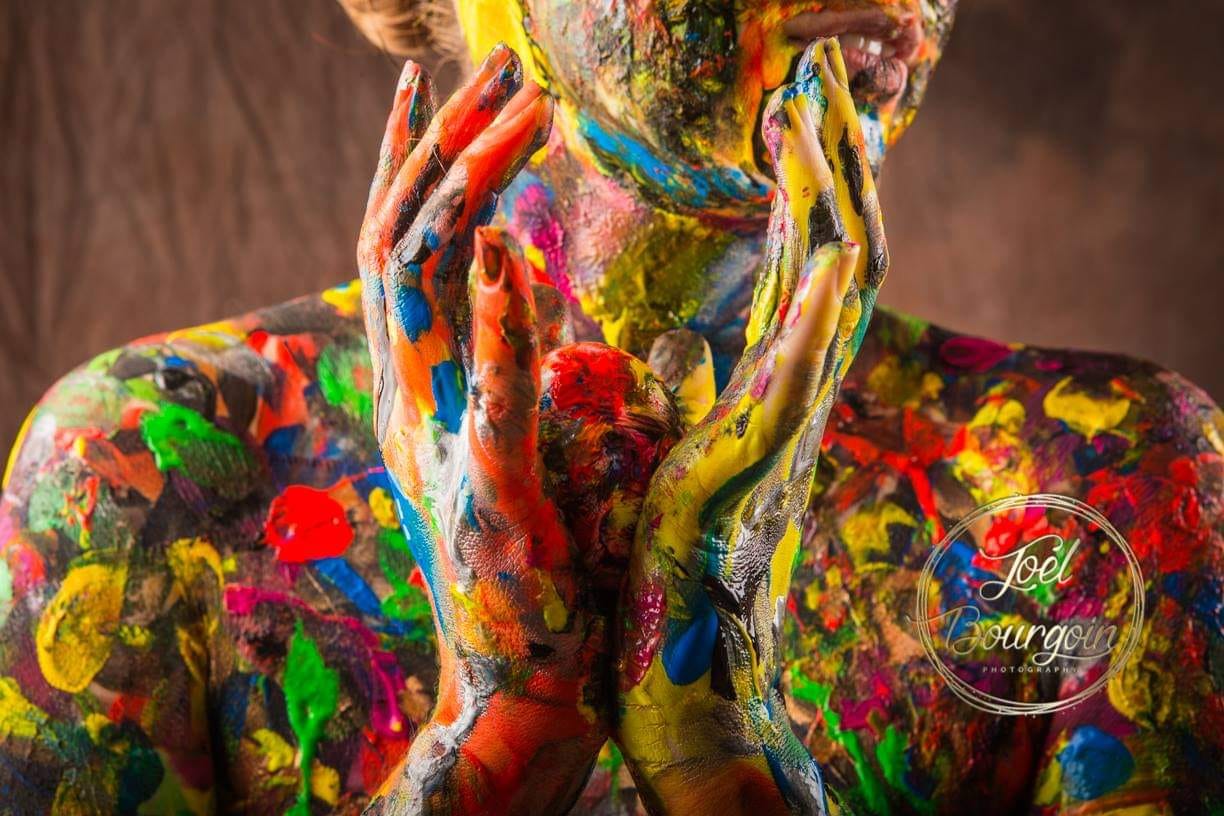
In my portraits, hands are as expressive as eyes. How a person uses or poses their hands is an infallible indicator of their character. Whether they are calloused from work, delicate, intertwined, or at rest, hands tell a part of the story that the face sometimes tries to hide. I pay particular attention to the direction of the fingers and the tension of the palms, for hands never lie. Learning to integrate them harmoniously adds a layer of essential narration to the final image.
7. Black and White: The Raw Truth
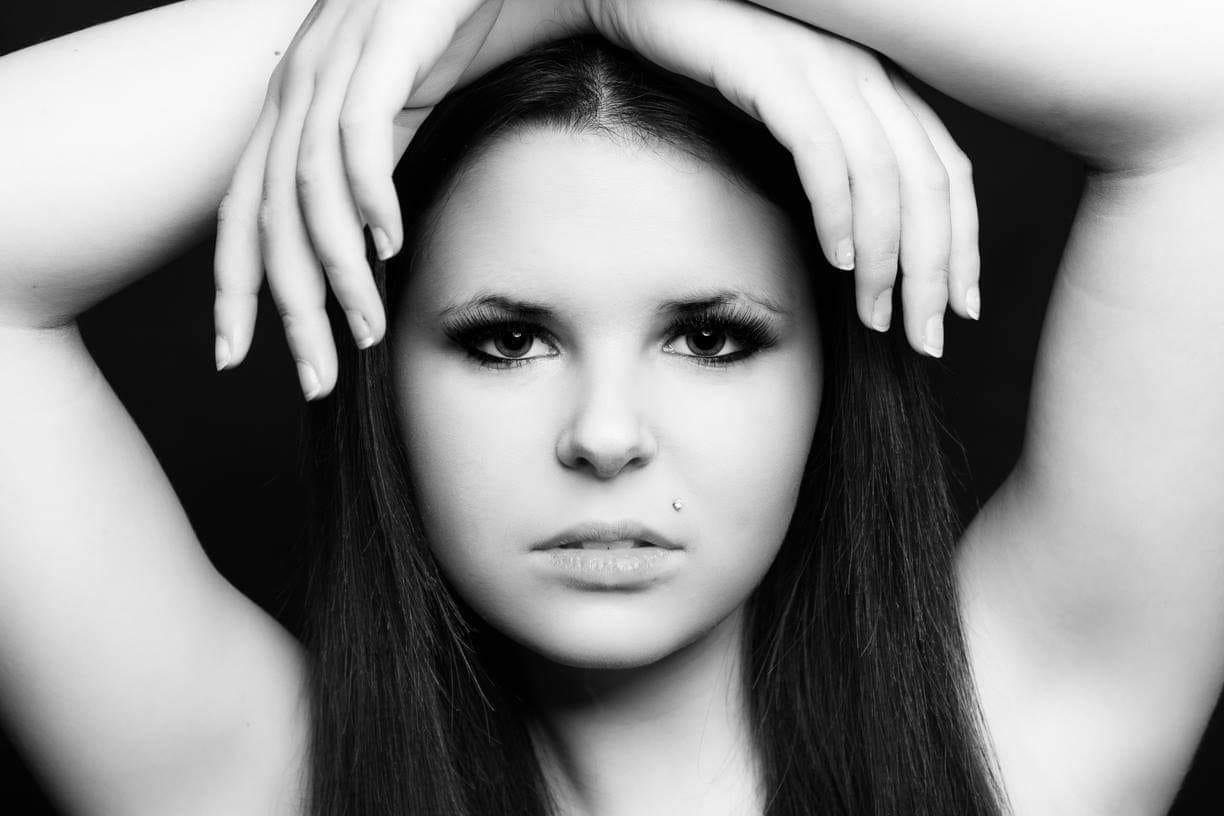
Black and white is the ultimate tool of psychological portraiture. By removing color, I remove the superfluous and the temporal. We no longer look at the fashion of your clothes or the color of your makeup; we look at the intensity of your presence. It is a deliberate choice that places your portrait in a timeless dimension.
Black and white allows focusing on textures, shadows, and the structure of the face. It is a simplification that, paradoxically, reveals all the complexity of being. A black and white photo does not age; it settles into eternity. It is the language of the soul, stripped of the distractions of the modern world.
8. Mastery of Ambient Light
I work exclusively in natural light. Whether it's the soft light of a cloudy afternoon or the sculptural gloom of a Vancouver Island undergrowth, I use what nature offers me. This organic approach respects the real atmosphere of the moment and avoids the artificial, flat look of studio lighting. Natural light possesses a truth that electricity cannot match. It changes, it moves, it forces us to adapt, exactly like human character. Mastering shadow is just as important as mastering light; it is in the shadow that the mystery and depth of a portrait often reside.
Ready to Reveal Your True Self?
Every face is a masterpiece waiting to be documented with dignity. Book your "As I Am" session today on Vancouver Island.
Book Your Portrait SessionConclusion: A Human Archive
Ultimately, portrait photography is a dance between two souls. It is not a job; it is a vocation of a witness. By seeking the soul rather than plastic perfection, we together create a visual legacy that goes beyond the simple frame of the image. A portrait "As I Am" is more than a photo; it is a testimony of your real existence, captured in all its dignity.
It is an archive of being, made of light and truth, intended to remind those who come after us that we were here, alive, complex, and beautifully imperfect. Thank you for allowing me to be the guardian of your light. Together, we continue to write this human archive, one portrait at a time, in the dignity and splendor of reality.