Capturing the Immensity
Mastering a panoramic photograph is, above all, a quest for balance between human vision and technical constraint. Too often, we stand before a landscape so vast—whether it be the peaks of Strathcona Park or the infinite horizon of Tofino—that a standard camera frame feels suffocating. A panorama isn't just a "wider" image; it's an attempt to restore a spatial emotion, a total immersion in the scenery.
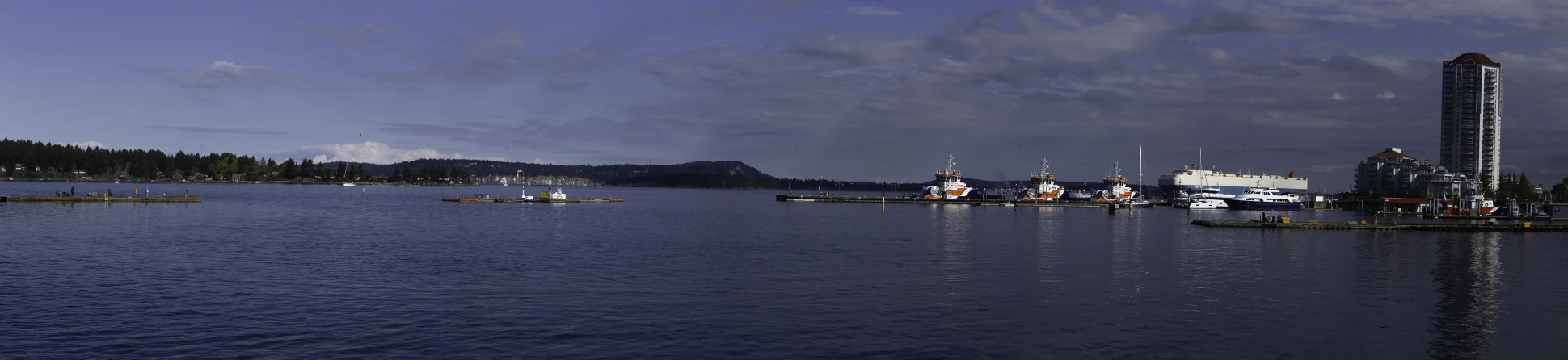
For the photographer, two paths are available. The first is using an ultra-wide-angle lens (often below 16mm). This method is immediate: everything is captured in a single click. However, it imposes significant distortion at the edges and tends to "push away" the central subject, making majestic mountains look curiously small at the center of the image.
The second method, which we prioritize at As I Am Photography, is stitching a series of identical photos. By pivoting the camera to capture several segments of a scene, you achieve phenomenal resolution and a much more natural perspective compression. Unlike the wide-angle which deforms, stitching respects the geometry of the landscape. It is a method that requires rigor, patience, and a nearly architectural discipline. It is the art of building an image, piece by piece, to offer the viewer a window onto the world without the optical compromises of a single lens.
1. Choosing a Constant Focal Length
For a successful panorama, consistency is your golden rule. The classic mistake is inadvertently changing the focal length between shots. Ideally, work between 35mm and 50mm. These lengths minimize optical distortion while providing enough detail. If you use a 50mm in portrait (vertical) mode, you capture a great height of sky and ground while maintaining a perspective close to the human eye. Avoid very wide angles for stitching, as the lens curvature will make the fusion (stitching) extremely complex, creating visible breaks in the horizon.
2. Uniformity: Manual Mode is Mandatory
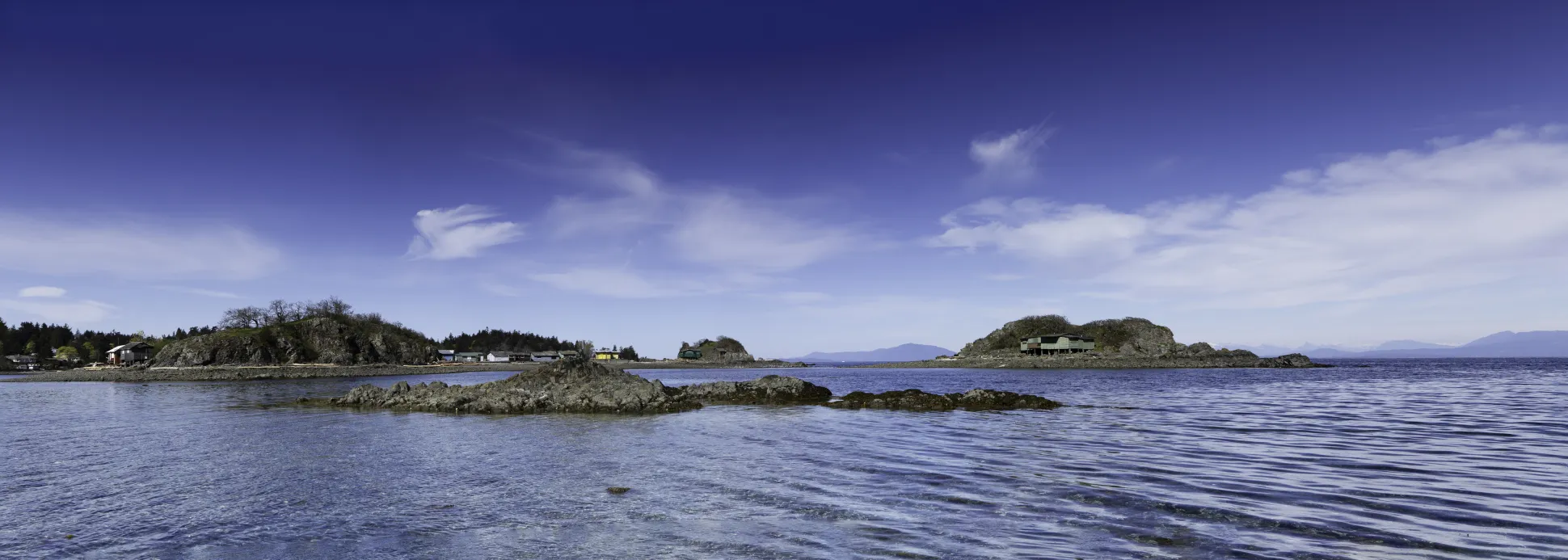
Image stitching tolerates no variation in light. If you stay in automatic mode, your camera will recalculate exposure for each segment: one photo will be darker because of a cloud, the next brighter because of a reflection. You must switch to Manual Mode (M). Fix your aperture (around f/8 or f/11 for maximum depth of field), your shutter speed, and your white balance. By locking these parameters, you ensure that the luminosity and colorimetry will be identical from the first to the last shot, allowing the software to fuse the images seamlessly.
Master Your Landscape Workflow
Are you struggling with technical execution or feeling overwhelmed by post-processing? I offer private 1-on-1 coaching sessions designed to help you build an efficient, professional workflow—from capturing the raw essence in the field to the final fine art print.
Inquire About Private Coaching3. Focus and Exposure on the Center Point
Before your sweep, determine the brightest or most important area of your scene. Measure exposure and set your focus on this center point. Once the focus is acquired, switch your lens to Manual Focus (MF) to lock it. If you leave autofocus active, it might "hunt" and focus on a nearby branch in one image and a distant mountain in the next, breaking sharpness continuity across your future panorama.
4. Sweep Discipline: From Left to Right
Tiring from left to right is a convention that helps mental organization and post-processing. It is the natural reading direction and ensures you don't miss any segment of the landscape. Start a bit wider than your intended starting point and finish a bit further than the end; this safety margin is crucial because the software will often need to crop the edges to level the final image.
5. Mimicking the Human Field of View
The ultimate goal of panoramic stitching is to recreate what we actually see. Our eyes do not see with the distortion of a 12mm lens; they perceive the world by scanning with a natural plane perspective. By using a standard focal length and assembling several views, you avoid the "fisheye" effect and keep mountains majestic. The proportions between the foreground and background remain faithful to your memory, creating that feeling of total immersion.
6. The Strategic One-Third Overlap
For stitching software to link your photos, it needs common anchor points. You must overlap each image by about 30% to 35% (one-third) with the previous one. Imagine a distinctive element in your viewfinder: place it on the right third of your image, take the shot, then pivot so that same element is now on the left third of the next photo. This overlap gives the algorithms enough data to perfectly align textures and compensate for slight parallax errors.
7. Absolute Stability: The Tripod and Panoramic Heads
Using a tripod is the only guarantee of a professional result. It ensures the axis of rotation remains perfectly horizontal, avoiding a sweep that "drifts" up or down. For perfectionists, investing in a manual panoramic head allows the camera to rotate around its "nodal point," eliminating alignment errors. For those seeking the absolute peak, robotic panoramic heads (like Gigapan) automate the process, allowing for "Gigapixel" panoramas composed of hundreds of photos with surgical precision.
Conclusion: Conquering the Horizon
Panoramic photography isn't just a technique; it's a hunt. Chasing a catchy panorama means learning to see potential beyond the viewfinder, embracing the vastness of the world around us. Imagine capturing the Milky Way arching over a mirror lake, or the jagged coastline of Vancouver Island stretching as far as the eye can see during a Pacific storm.
Nature is vast, wild, and unpredictable; it deserves our ingenuity to pay it tribute. Do not let the edges of your sensor limit your vision. Take your tripod, find your "flow," and let the immensity enter your camera. Every panorama is a promise of freedom, a proof that the world is much larger than we imagine. Go out, explore, and capture the infinite.
The Panoramic Toolbox
Essential gear and software to elevate your panoramic workflow:
Hardware Essentials
-
Manual Panoramic Heads
For precise nodal point rotation. -
Gigapan Robotic Heads
The peak of automated high-res captures. -
Shimoda Tripod Systems
Rock-solid stability for the wilderness.
Stitching Software
-
PTGui Pro
The industry standard for professional stitching. -
Adobe Lightroom Classic
Intuitive and effective for most panoramas. -
Hugin (Free/Open Source)
Powerful cross-platform panorama creator.