12 Methods for Capturing the Raw Truth of Childhood
Introduction: Beyond the Cliché, the Raw Truth
Child photography is often reduced to an aesthetic quest for perfection: impeccable clothing, coordinated decor, and, above all, that famous forced smile obtained through constant shouts of "Cheese." However, as a photographer who exclusively favors natural light and on-location sessions, I am convinced that beauty does not lie in the pose, but in the raw truth of the moment. Capturing the essence of a child means accepting to become a silent observer of their inner universe. This is where my "As I Am" philosophy takes on its full meaning: receiving a moment rather than manufacturing it. To succeed in these portraits that stand the test of time, the barrier between the lens and the subject must be broken. This article offers twelve concrete methods to transform your gaze and make your camera a tool for connection rather than an instrument for staging.
Share the Journey
Are you looking for a creative collaboration or a unique professional perspective? Let's build something authentic together.
1. The Rule of Omnipresence: The Camera as a Family Member
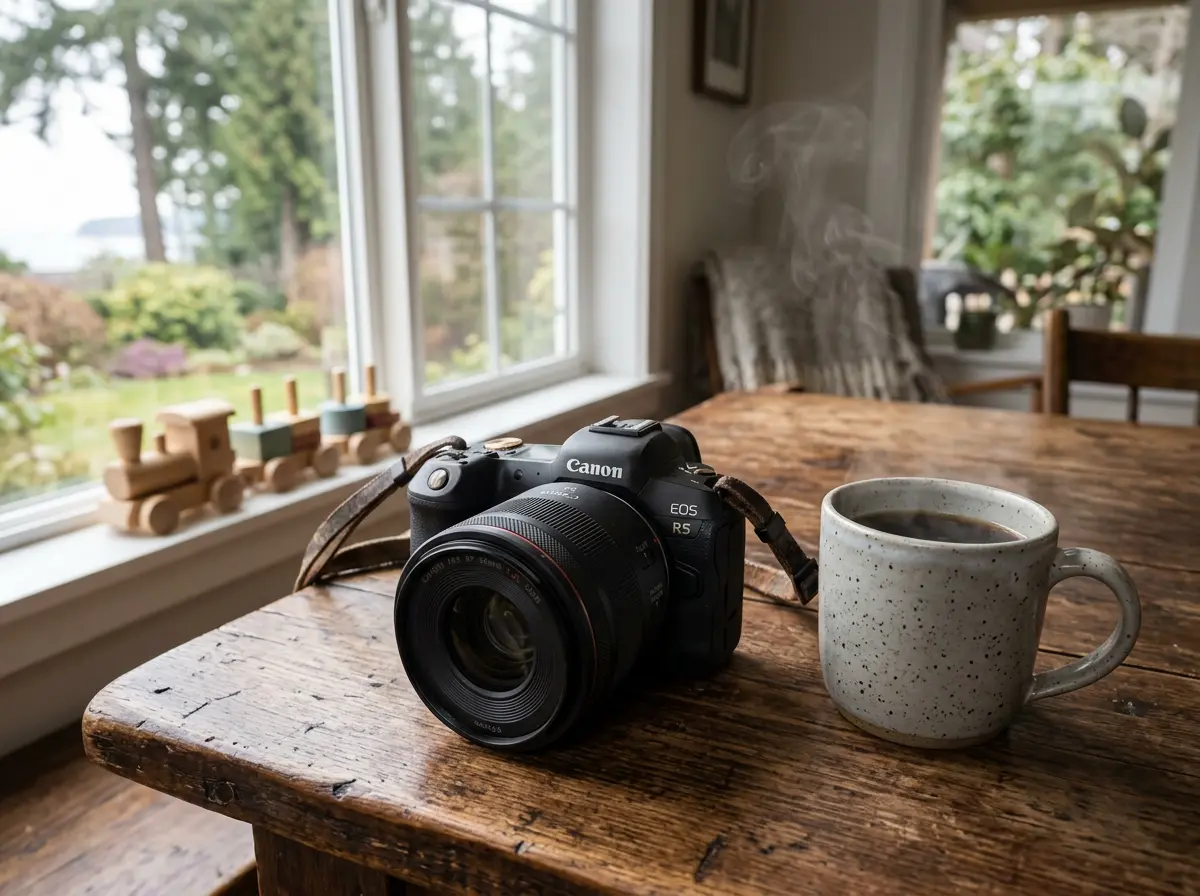
The Act: This method consists of breaking the solemn ritual of "the photo session." Instead of keeping your equipment (like your Canon R5) tucked away in a protective bag, place it securely but visibly in common living areas (living room, kitchen). The idea is that the camera should no longer be synonymous with a special event, but an everyday object, just like a book or a cup of coffee.
The Causes: Human beings, and particularly children, change their behavior as soon as they feel observed by an unusual device. The sortie of the camera bag often triggers a defensive reaction: the child freezes, forces a smile, or, conversely, runs away. By leaving the camera omnipresent, you eliminate the element of surprise and the tension associated with the technical tool. You shift from the status of the "arriving photographer" to that of the "observing parent."
The Result: Total desensitization is achieved. The child eventually stops paying attention to the lens. The visual result is a disarming authenticity: you capture expressions of rest, looks lost in thought, or moments of serious play without the child seeking to please the camera. This is where true "As I Am" photography begins.
2. The Five-Minute Ritual: The Strength of Repetition
The Act: Engage to take photos every single day, without exception, for a very short duration. Choose a constant transition moment, such as breakfast or the return from school. It is not about producing a daily masterpiece, but about practicing the act of photographing as a routine habit.
The Causes: Repetition creates a sense of security and predictability. For a child, routine is reassuring. If photography becomes a predictable step in their day, they stop perceiving it as an intrusion or a demand for performance. This also allows the photographer to warm up their eye and not let their technique rust between official sessions.
The Result: Over time, these "five minutes" become invaluable archives of growth. The result is a series of portraits where progression is fluid and natural. The child becomes incredibly comfortable because they know the interaction will be brief and pressure-free, allowing you to capture micro-expressions that you would never have obtained during a single one-hour session.
3. Becoming the Invisible Observer: The Art of Immersion
The Act: This method requires physical discipline: staying near the child while they are absorbed in a task (drawing, reading, observing an insect) without ever saying their name or giving directives. You must blend into the environment, often using a prime lens like a 50mm that forces you to move gently around the subject.
The Causes: A child's brain enters a state of "flow" when they play intensely. Any word from the photographer breaks this state of pure concentration. The main cause of failure in a child's portrait is the interruption of their imagination by an adult's request. By remaining silent, you respect their psychological integrity and their creative space.
The Result: You obtain images of rare psychological depth. The result is not a photo "for social media," but a document of the child's soul. We see intense concentration, a pensive pout, or sincere wonder. These photos have an emotional weight far superior to posed portraits because they show the child as they truly are when no one is watching.
4. The "False Start" Technique: Capturing the Release
The Act: After taking a few photos, clearly announce that you have finished. Put the camera over your shoulder, start talking about something else, or pretend to leave. However, keep your hand on the shutter and stay alert. It is at this precise moment, when the child's attention drops, that you take the final photo.
The Causes: Most people, children included, hold their breath or contract their facial muscles when they know they are being photographed. It is an instinctive reaction to control the self-image. The "false start" releases this tension. The child exhales, their shoulders drop, and their muscles relax. It is the moment the mask falls.
The Result: The result is often the best photo of the entire day. It is the image where the smile is finally in the eyes and not just on the lips. You capture a sigh of relief, a laugh of complicity, or a more relaxed posture. These shots possess a softness and truth that contrast radically with the first few minutes of the session.
5. Transforming the Camera into a Discovery Toy: Demystification
The Act: This method involves actively inviting the child to explore the technical aspect of photography. Rather than treating your equipment as a forbidden and fragile object, take a moment to let the child look through the viewfinder, observe how the lens moves during focusing, or even press the shutter button to take a photo of you or their environment.
The Causes: Fear or shyness in front of the lens often stems from a feeling of the unknown or a power asymmetry between the adult who "takes" the photo and the child who "gives" it. By sharing the tool, you transform the camera from an intrusive object into a shared and fascinating project. This satisfies the child's natural curiosity and turns the session into an interactive game rather than a static ordeal.
The Result: The result is immediate complicity. The child no longer sees the lens as an "eye" judging them, but as an instrument they understand. In photos, this translates into a more confident gaze, a relaxed posture, and a willingness to collaborate. This step is crucial for establishing the mutual respect at the heart of your philosophy.
6. Capturing "Transition Moments": The Poetry of the Ordinary
The Act: This strategy requires the photographer to be on the lookout during phases of change in the day: a difficult waking up, the moment of putting on boots to head out onto Vancouver Island, or the silent wait for a meal. These are moments when the child is not yet "performing" and their mind is elsewhere.
The Causes: We tend to only take the camera out during moments of explicit joy or celebration. Yet, a child's life is made of a thousand nuances of calm, fatigue, and reflection. These transition moments are the most honest because they escape social control. They represent the "raw truth" you seek in your personal projects.
The Result: You obtain images of exceptional narrative power. The visual result is often melancholic, soft, and deeply human. It is these photos, showing the reality of daily life without artifice, that become the most precious memories over time, as they freeze the very essence of childhood in all its vulnerability.
7. Playing with Physical Distance: Intimacy and Freedom
The Act: This involves consciously alternating between two extremes. On one hand, using a telephoto lens to stay at a respectable distance and leave the child in their "bubble" of play. On the other, using a wide-angle lens to get very close, almost into their personal space, during a calm moment like reading a book.
The Causes: Each focal length tells a different story. Physical distance allows the child to forget your presence, favoring the natural exploration of their environment. Conversely, extreme proximity creates a total sense of immersion for the viewer. Varying these distances allows for capturing the child's duality: their growing independence and their visceral need for proximity.
The Result: A varied and dynamic portfolio is achieved. The result of distance is a capture of the child in harmony with the surrounding nature. The result of proximity is a portrait of rare intensity, where every detail of the skin and every nuance of the gaze create a direct connection with the viewer.
8. Avoiding the Word "Smile": The Search for Real Emotion
The Act: This is arguably the most difficult point: radically banning verbal commands such as "Look here" or "Say Cheese." The act consists of replacing these orders with genuine human interactions: telling an absurd story, asking a question about an imaginary dinosaur, or simply sharing an attentive silence.
The Causes: The forced smile is the enemy of authenticity. It contracts the facial muscles in a way that never reaches the eyes, creating an empty image. The cause of a successful portrait is an emotion generated from within. As a photographer favoring natural light and on-site sessions, you know that emotion must be born from the present moment.
The Result: The result is an expression with a soul. We no longer see a child "posing," but a child feeling. Whether it is a burst of laughter, a doubtful pout, or a look of astonishing depth, the portrait becomes a work of art that bears witness to the child's unique personality instead of producing a generic cliché.
9. Photographing Interactions, Not Just the Face: The Body Language
The Act: This method consists of voluntarily decentering your gaze from the child's face to focus on peripheral details: a small hand firmly grasping a parent's finger, bare feet covered in sand on an Island beach, or the way a child clings to their favorite stuffed animal. It involves framing tightly on fragments of their daily life.
The Causes: The classic portrait is often limited to the face, but a child's story is written with their whole body. Their hands tell of their curiosity, their feet tell of their exploration, and their postures tell of their mood. By varying subjects within the same session, you remove the burden of "facial performance" from the child, allowing them to relax while you explore other angles.
The Result: The result is a series of highly poetic and narrative images. These detail photos act as powerful memory anchors. In twenty years, the image of those chubby little hands holding a seashell will have an emotional charge as strong as, if not stronger than, a traditional portrait, as it freezes a specific stage of physical development and innocence.
10. The "Silent Focus" Technique: Sonic Invisibility
The Act: Here, you use the technological capabilities of your camera to become completely inaudible. By activating the silent electronic shutter and designating focus points via the touchscreen or eye tracking, you eliminate the mechanical "click" that traditionally signals the moment of capture.
The Causes: The shutter sound acts as a social signal. As soon as a child hears the "click," they know they have been captured and, subconsciously, they change their expression for the next photo or stop playing. By removing this sonic feedback, you break the link between the act of photographing and the subject's reaction. You remain in pure observation, without ever breaking the silence of the scene.
The Result: Total fluidity in expression is achieved. The result is a capture of micro-movements and fleeting glances that would never have survived the awareness of being photographed. This is the ultimate tool for your practice exclusively in natural light, as it allows you to stay as close as possible to the emotion without ever disturbing it with mechanical noise.
11. Following Their Gaze, Not Yours: The Child's Vision of the World
The Act: Instead of trying to pull the child's gaze toward you, this method requires you to follow the direction of their own eyes. If the child is looking at an ant on the ground or a cloud in the sky, aim your lens to capture both their face in profile and the object of their fascination.
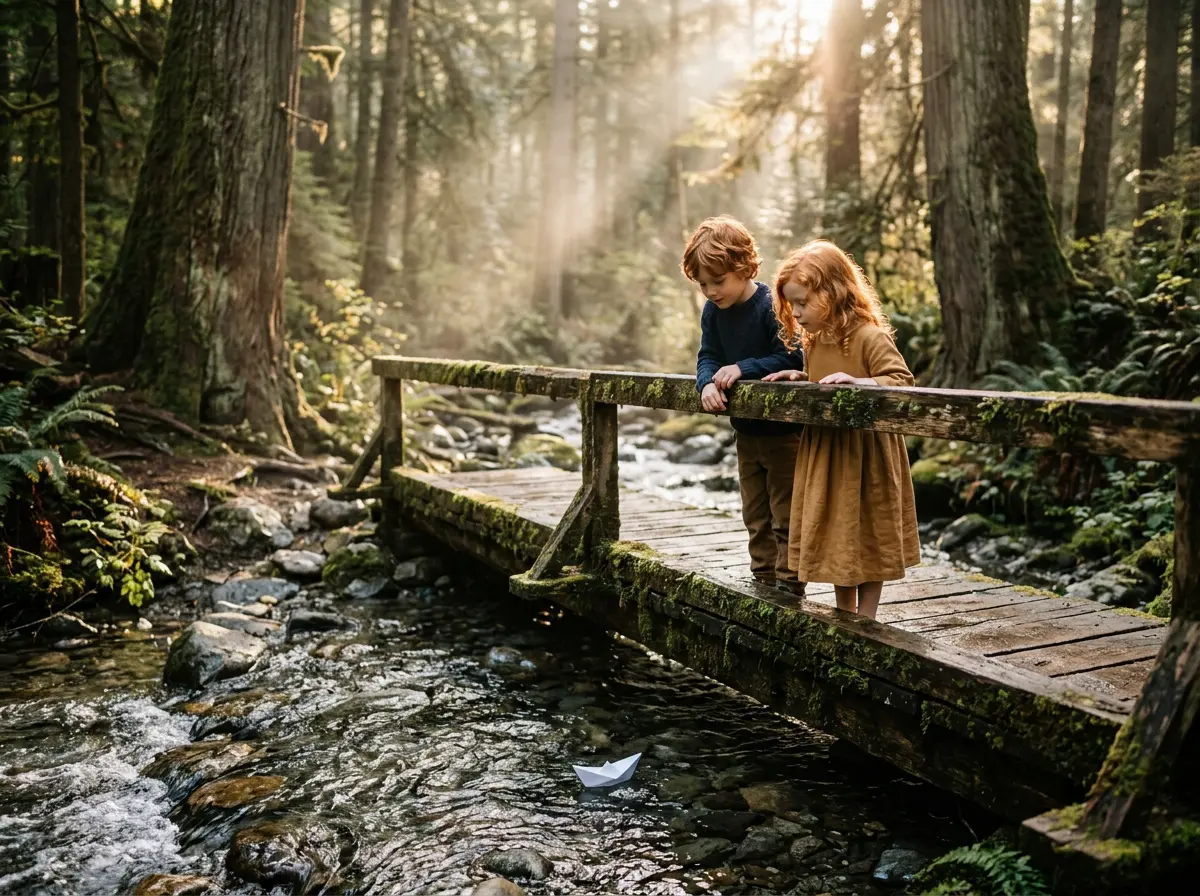
The Causes: Photography is often an imposition of the photographer's will on the subject. By following the child's gaze, you reverse this power dynamic. You agree to become the witness to their curiosity. This demonstrates a deep respect for their autonomy and for their unique way of discovering the world, a core value of your "As I Am" manifesto.
The Result: The result is an image with an internal narrative structure. We don't just see what the child looks like; we see what they feel and what amazes them. These photos create a bridge between the viewer and the child's inner world, making the portrait much more alive and anchored in a shared reality.
12. Accepting Imperfection: The Beauty of Real Chaos
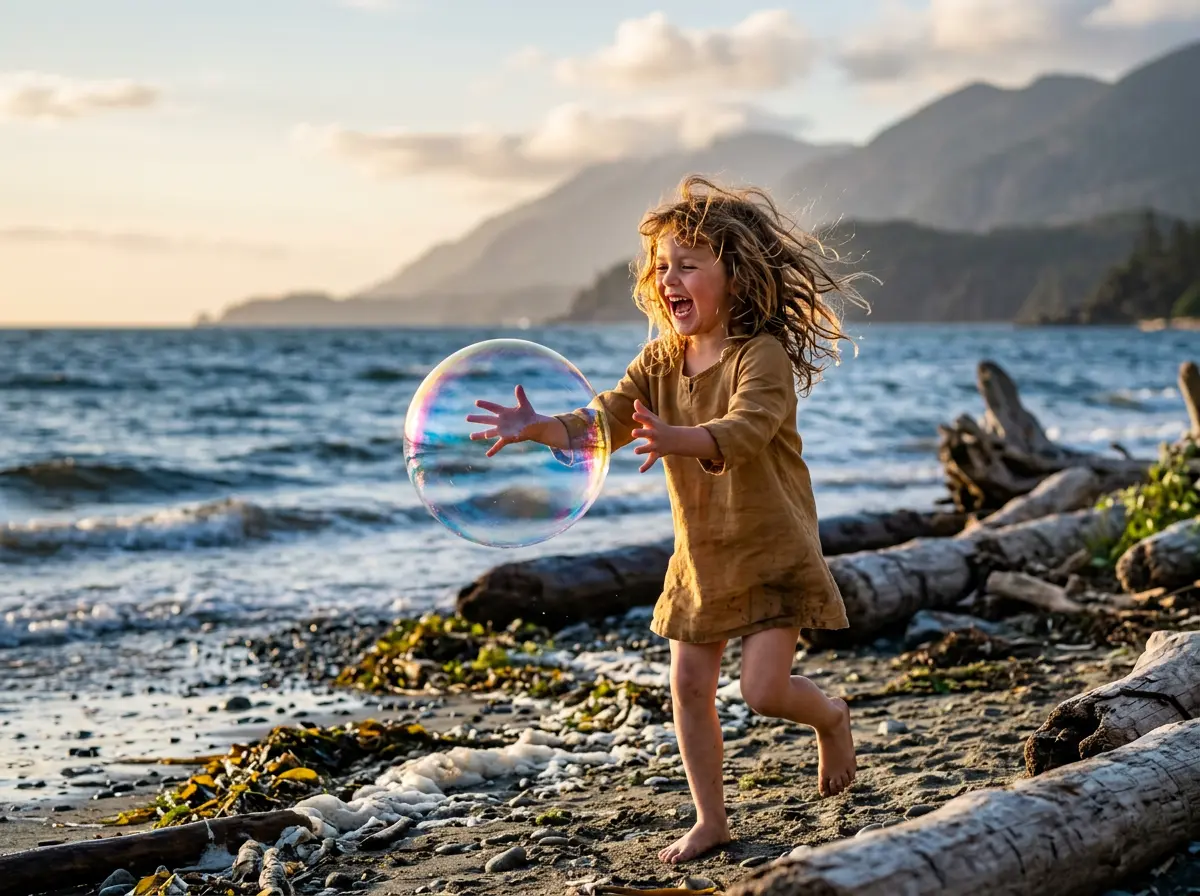
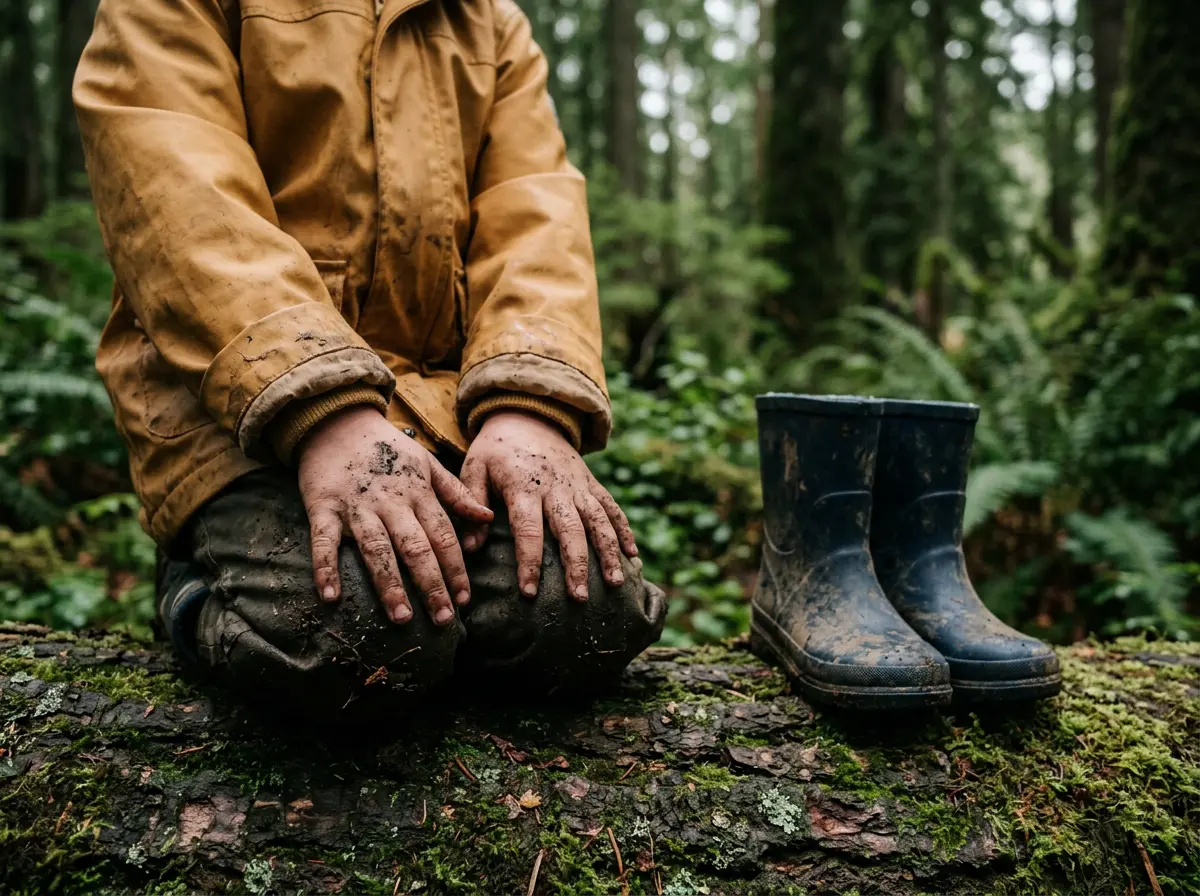
The Act: This final method is a mental posture: refusing to "clean up" the scene. This means not removing crumbs on the face, not smoothing hair ruffled by the West Coast wind, and leaving toys lying around in the background. It is the total acceptance of the living environment as it exists at moment T.
The Causes: We tend to want to smooth reality to make it "presentable." However, by doing so, we erase the temporal and personal clues that make a photo unique. A slightly messy face or a cluttered room are markers of life. Perfection is often sterile, while imperfection is the soil of nostalgia and raw truth.
The Result: The result is a photo that breathes life. In the future, it is not the perfect studio photos that will be remembered, but the one showing the joyful disorder of childhood. The visual result is authentic, warm, and deeply honest. It is the perfect conclusion: perfection is not the goal, truth is.
Conclusion: Documenting the Soul, a Visual Legacy
Successfully portraying one's children is not measured by the technical sharpness of an image—although the precision of a camera like the Canon R5 is a valuable asset—but by the emotional charge it carries. By integrating these twelve methods into your daily life, you are not just taking photos; you are building a visual legacy of rare honesty. Photography then becomes an extension of your presence, a way of saying to the child: "I see you as you truly are."
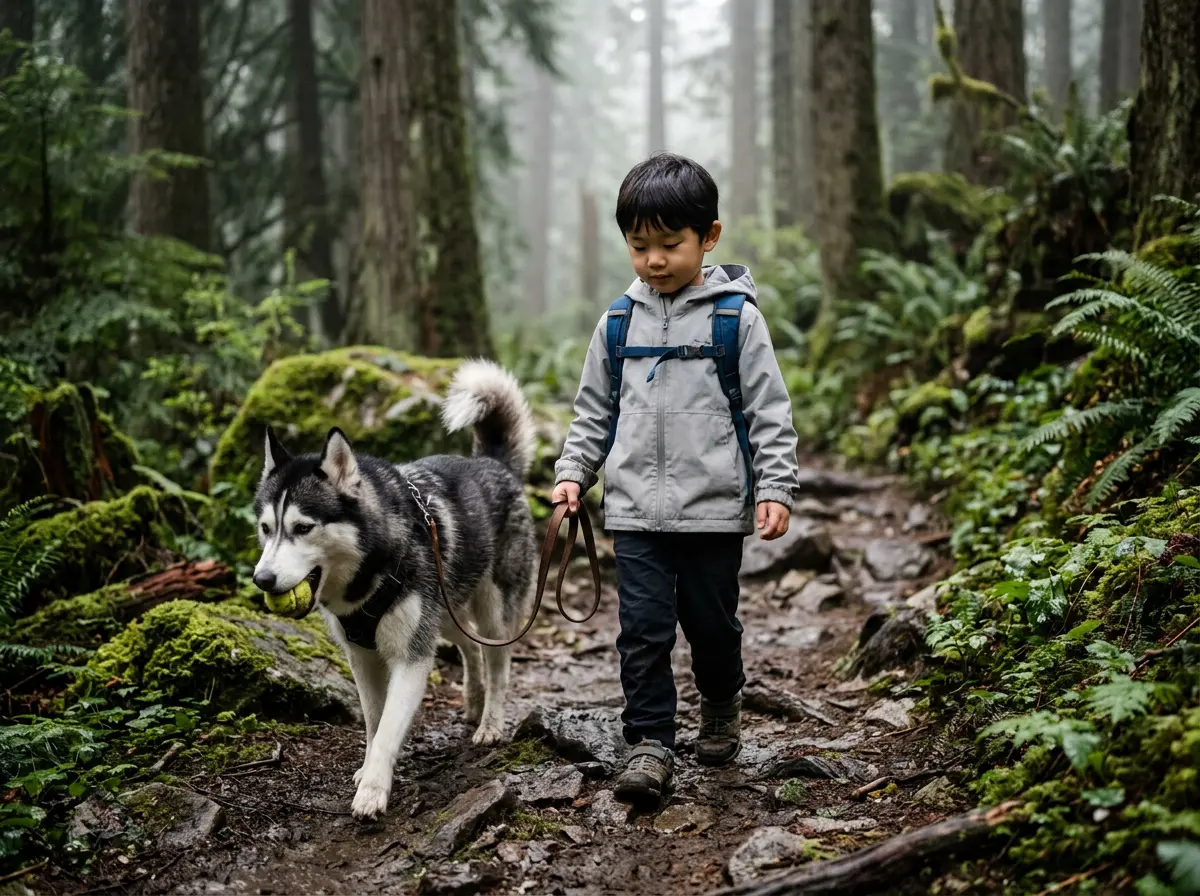
Whether you are exploring the misty paths of Cathedral Grove or capturing the morning light in your kitchen, remember that perfection is the enemy of memory. The most powerful shots will often be those where hair is wind-tossed by the West Coast breeze and where the gaze is turned toward the invisible. I encourage you, this weekend, to drop expectations and stagings. Go out, observe, and let the magic of spontaneity happen. That is the whole essence of my approach.